
SimThink Edu Story · Episode 01
한국어판 →From Players to Makers —
the kids didn’t quit gaming.
They crossed to its other side.
Don’t take games away from your kids. Give them the other side of the screen — the maker’s seat. In the summer of 2026, ten elementary schoolers in Yeongyang, rural Korea, crossed that line in four Sunday classes. This is the record.
Things used in this project
No robotics kits. No coding textbooks.
Six components moved this classroom — all built and operated in-house by Myeongseong Simjae (MSSJ).
01
A creation agent
A child says "make me a game where a cat jumps on clouds" and gets back a working web game as a playable link. No installs, no accounts, no code.
02
The Playground
A class-only showcase. Publish your game, and classmates play it and tap "like." Plays and likes are tallied automatically.
03
An invisible running mate
Operators watch the platform remotely during class. When a child hits a wall, they fix only the broken floor — in about ten minutes — and hand the steering wheel right back.
04
A weekly award loop
The game friends played the most wins next week’s prize. Making well is defined as making something others enjoy.
05
A remix textbook
The final week’s teaching material is the teacher’s own finished game, dissected together and inherited by every student.
06
An automatic ledger
Every play, like, and revision is logged. Every number in this story comes from that ledger.
Chapter 1
Intent is the new source code
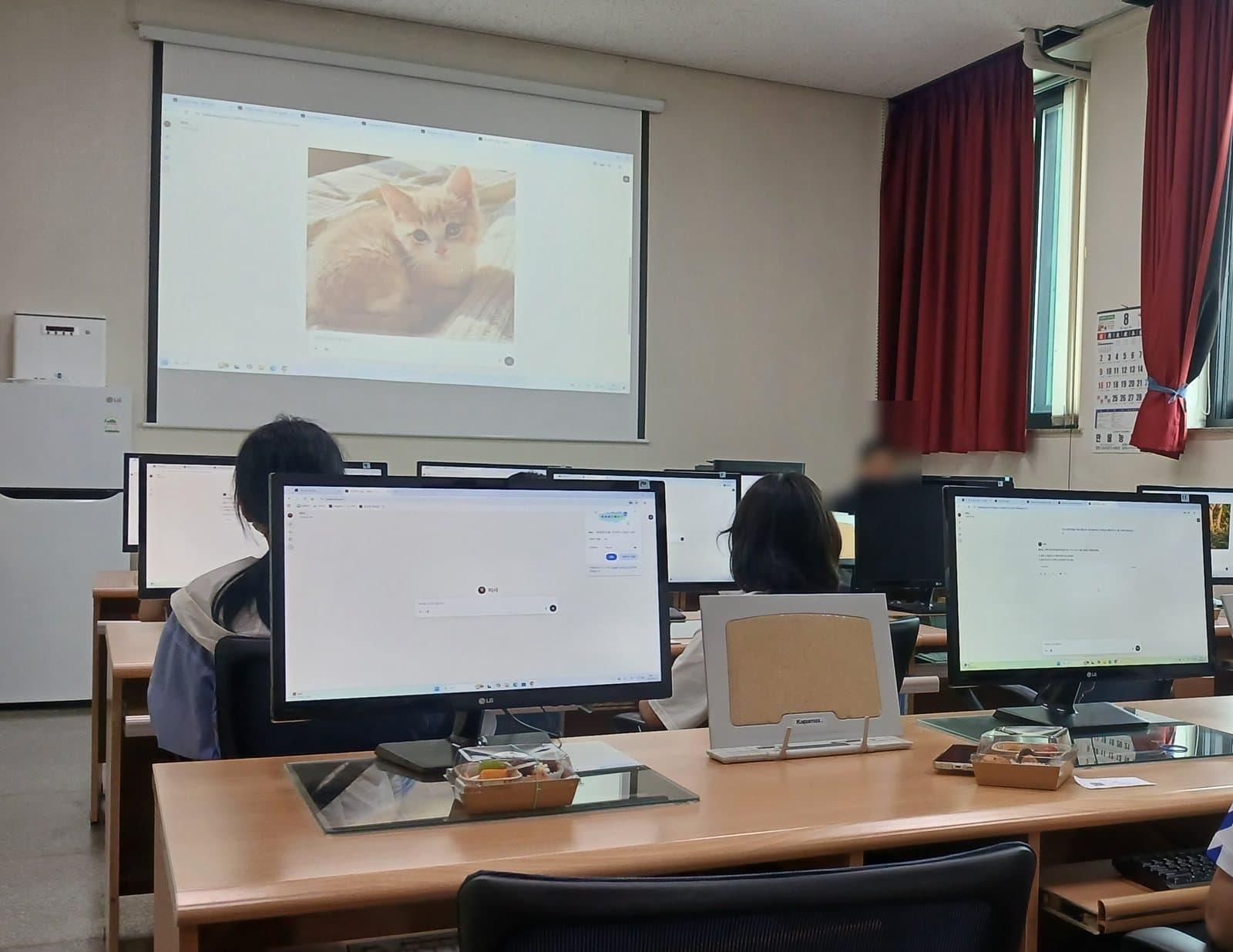
Week one had a single goal: “my words become a game.” Before any shortcut keys, the kids learned to put what they wanted into precise words. Say it — run it — check it — change it. That four-beat loop is the actual working cycle of software development, translated into a child’s language.
The era when you had to learn a programming language to make things is ending. The next era’s source code is clear intent: knowing what you want, and saying it so that someone — human or AI — can execute it without misunderstanding. That, not game development, is what this course trained.
Twelve games were born on day one. All started from the same example; they split on their own into runners, jump maps, collecting games, a garden sim, a game of tag. Variation doesn’t need to be taught — it happens the moment a child gains the means to state their own intent.
Chapter 2
An economy of audiences
Half of the making experience is having an audience. The moment finished games went up on the Playground, the air in the room changed. Kids polished their own games in between playing everyone else’s.
The Playground has one rule, printed on its front page: “the game friends play the most becomes the game of the week.” On an actual podium, the kids learned that making well means making something others can enjoy — production, audience, and reward circulating in a miniature creator economy.
And the number that convinced us it stuck: on weekdays, with no class scheduled, the Playground still logged 138 plays. Not homework — a habit.
10
children enrolled, four Sundays
116
published works (36 games + 80 videos & songs)
1,415
plays and views of each other’s work
198
likes exchanged
Chapter 3
The invisible running mate
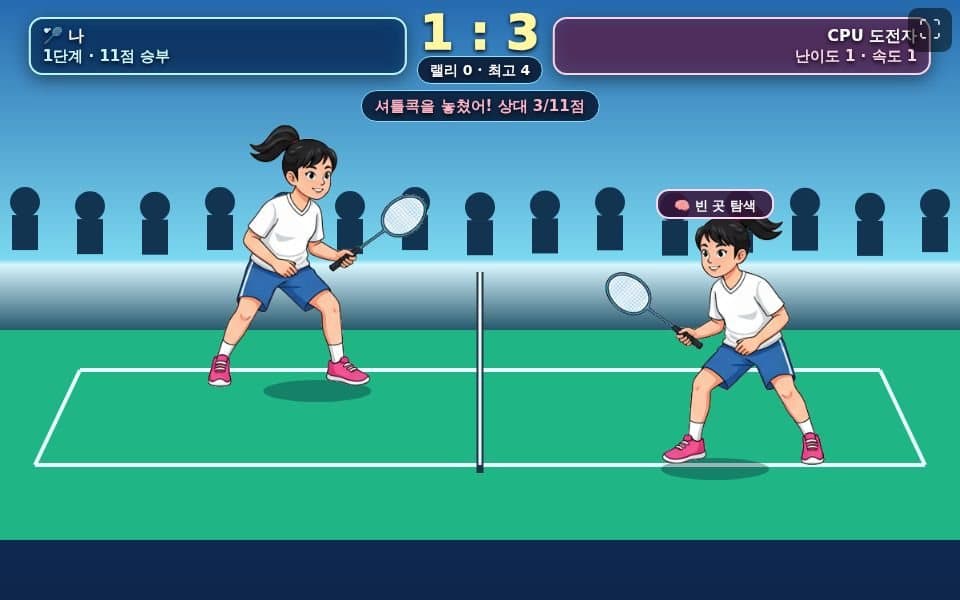
In the final class, one child attempted a badminton game — an ambitious leap — and hit a wall. The shuttlecock ignored physics; rallies simply didn’t happen. Operators traced the cause remotely and, in seven minutes, returned a game where rallies worked. The child kept building on top of it: free court movement, curve shots — their own ideas, on a floor that finally held.
That is the entire support philosophy in one scene. Intervention never takes the work away from the child. Fix only the broken floor; hand back the steering wheel. In classic pedagogy terms: scaffolding in the zone of proximal development — done live, at software speed.
Chapter 4
Learning to inherit
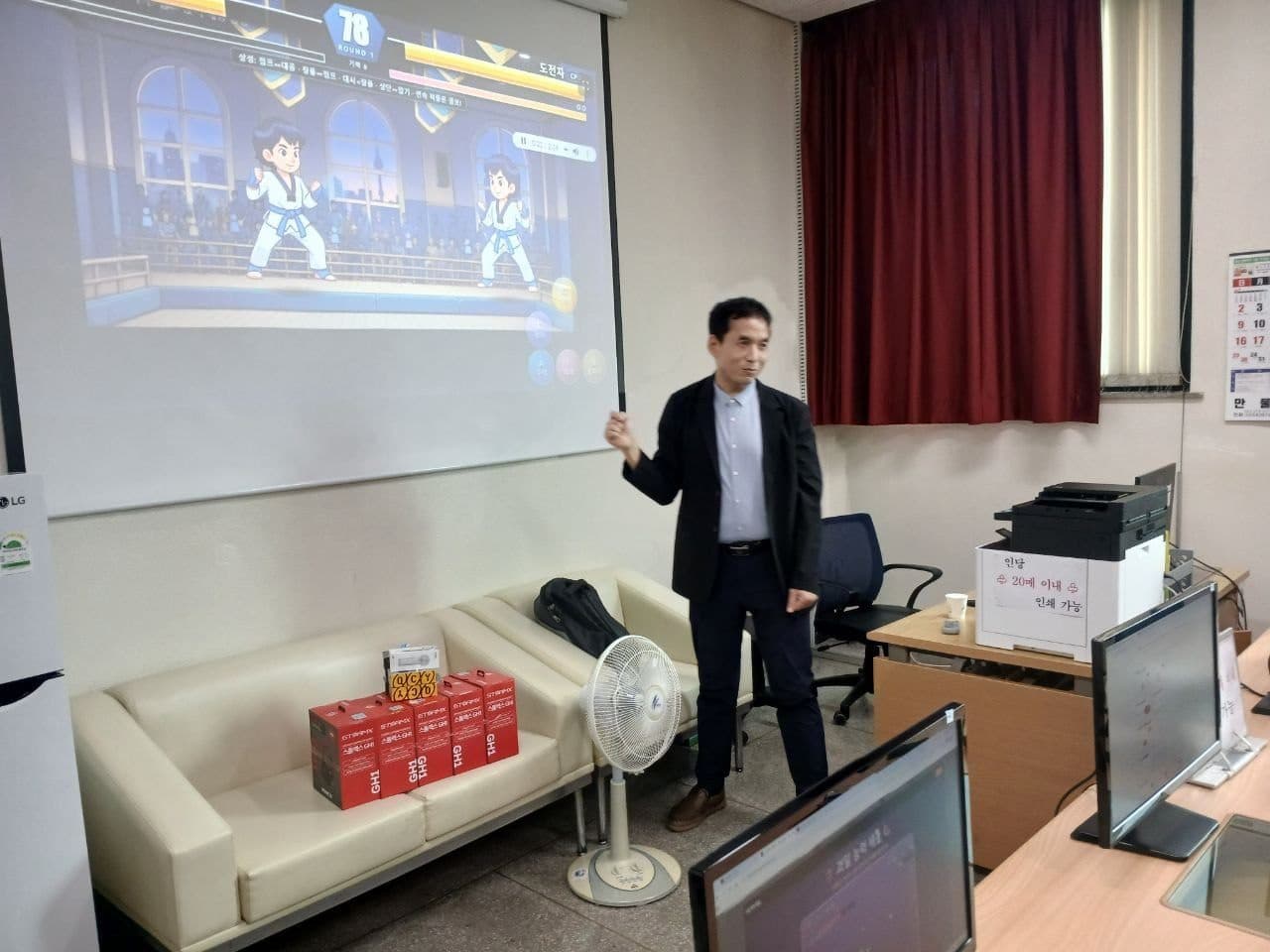
The final week’s textbook wasn’t a textbook. It was the teacher’s own finished fighting game, Taekwon Wave. The class dissected it together, then every child inherited the original and shipped a personal remix. Every single participant completed one.
Rewriting someone else’s finished work is the mainstream of real-world creation — most of the world’s software grows on top of someone else’s code. Remixing was these kids’ first taste of open-source culture. And their language changed: “make it more fun” became “speed up the ultimate gauge just a little.”
One child went a different direction entirely: instead of strengthening their own character, they kept asking to make the opponent smarter — not to win easily, but to build an opponent worth beating. The most designer-like request of the whole course.
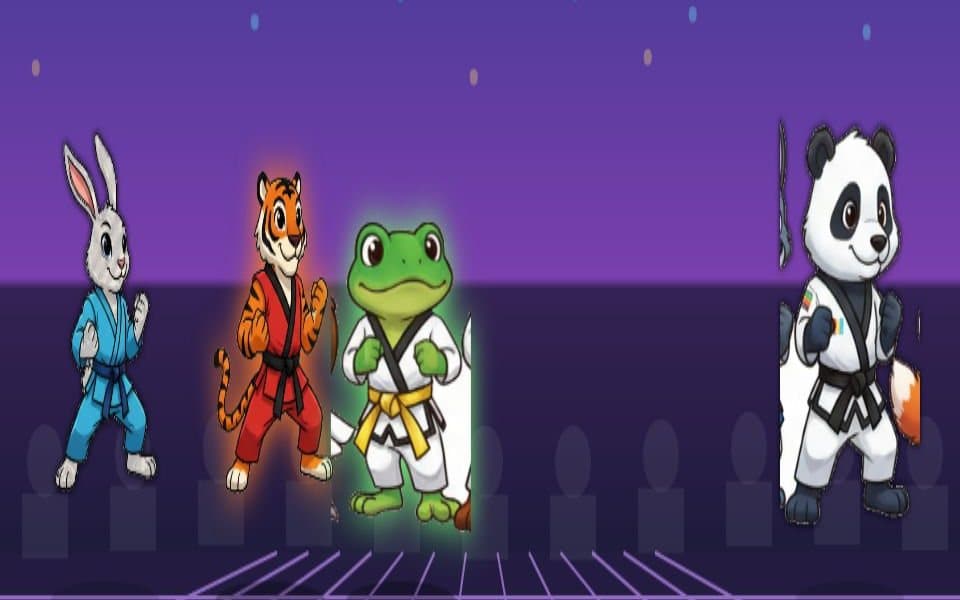
The remix that swapped the hero for a whole animal team
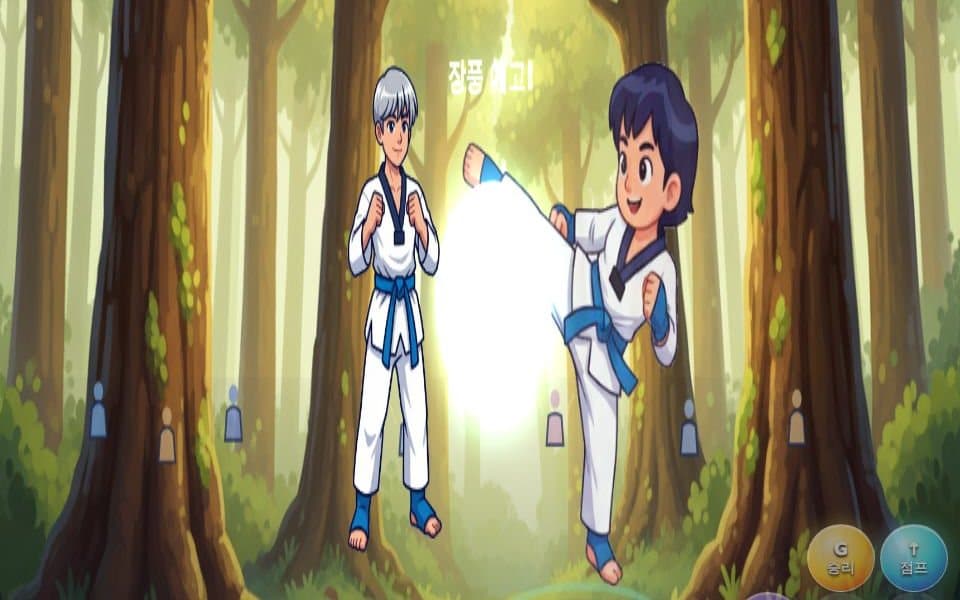
A duel recolored in one child’s own palette
A whole different sport built on a fighting game’s skeleton
Chapter 5
The future arrived in the shadow zone first
None of this happened in Silicon Valley. It happened in the community-center classroom of a shrinking rural county with no coding academies. When tools understand plain speech, the map of who gets to make things is redrawn. The advantage belongs to whoever can state their intent clearly — and a ten-year-old in Yeongyang qualifies.
Four weeks required three conditions: a tool that builds from words, a playground of mutual audiences, and an operation that clears any blockage within ten minutes. All three transplant cleanly — the same grammar has already worked with civil servants and at a disability welfare center. This is also MSSJ’s social commitment: bringing the maker’s seat to children and seniors in underserved regions first.
The kids came to play games. They left as creators who put their own name on their own version. What this experience planted isn’t a skill — it’s a stance: imagination becomes words, and words become reality.
Behind the numbers
Every figure in this story is a measured value from the platform’s automatic ledger, reported to the commissioning public office in a 52-page final report. Children appear only under anonymous nicknames.
Bring this classroom to your town
The three pillars — tool, playground, running mate — transplant to schools, community centers, and corporate training alike.
Episode 01 · “Imagination to Reality” — a four-week AI game-creation course for elementary schoolers (Jul 27 – Aug 17, 2026) · Hosted by Yeongyang-eup Community Service Center · Organized by Myeongseong Simjae · Built on SimThink Edu, MSSJ’s in-house education platform — to be continued.