
Proof
Everyone leaves with
something they made.
Public officials, children, and users of a disability welfare center: we ran three classes in one month. Their ages, backgrounds and starting points were different. We measured one thing in every class: what each person made and took home.
The premise
Making what you want to make,
whatever you have to start with.
In the years ahead, knowing a tool will not be enough. People will need the experience of actually getting done what they want to do.Many people think they need money or skill before they can try. We believe education should lower that barrier.
On some days the goal is fun. On other days the goal is reaching a target. Both are education. One condition is the same for both: the class fits each person, and each person ends with the experience of reaching their own goal.
So we put the weight on the finish. No one goes home with work half done. We judge a class by what is in people's hands at the end. This is the biggest difference in MSSJ training.
Three classrooms, the same result
The numbers below come straight from the class records (request logs, the works board and activity counts). They are not estimates for promotion.
2026 Yeongyang County IT training for public officials
July 20 to 23, 2026 · Yeongyang County Youth Training Center
They practiced with real public work (answers to residents’ complaints, notices and reports). Each went home with a web app they made for their own work.
25seats
One AI agent per person
93%
Average practice quiz score of those who finished the quiz
7apps
Web apps by graduates, published live
AI creative class, session 3
August 10, 2026, 2:08 p.m. to 4:01 p.m. · Yeongyang-eup Administrative Welfare Center
Third-grade children learned to say “change it like this.” They made, fixed and made again. Their friends played the games they built.
27works
Works posted (including 20 games)
218requests
Requests typed by the students themselves
36%
Share of requests that were “make” or “fix”
AI creative class, morning group
August 10, 2026, 10:07 a.m. to 11:47 a.m. · Disability welfare center, Yeongyang branch
“Cat.” “Number 1.” “Music.” With short words, participants still went all the way to the end. In two hours, 32 works went up on the works board.
32works
Works posted
287requests
Requests made by the participants themselves
48%
Share of requests that were “choose” or “name the materials”
Note: On August 10 alone, the two classes posted 59 works to the works board. Participants made 505 requests themselves.
The finding
Same tool, different ways of talking to it
We analyzed all 505 requests, word for word, from two classes held on the same day with the same tool. The two classes created in completely different ways, and both reached finished work.
Welfare center, morning group
By choosing
“Cat.” “Number 1.” “Music.” 48% of requests were choosing or naming materials. We designed the agent to offer three choices or fewer, and that design worked as planned.
The words stayed short, but there were 25 “add more” requests. Participants looked at the result and spoke to the agent again.
Children and youth, afternoon group
By fixing
“Change it like this.” 36% of requests were making or fixing. Requests that only asked for a fix were 12.4%.
Requests got longer as the class went on: from 20.6 characters at the start to 23.3 characters at the end (Korean characters). The instructions became more precise.
For us, personalization means leaving open the way of working that fits each person, without lowering the difficulty. Some people chose and some people fixed. The ways were different, but at the end each person had their own work.
The floor
The children used a
practice agent we built ourselves.
We did not rent a subscription product. We watched where children got stuck in class, and MSSJ built this environment to remove those points. The ordering organization does not need to prepare anything.
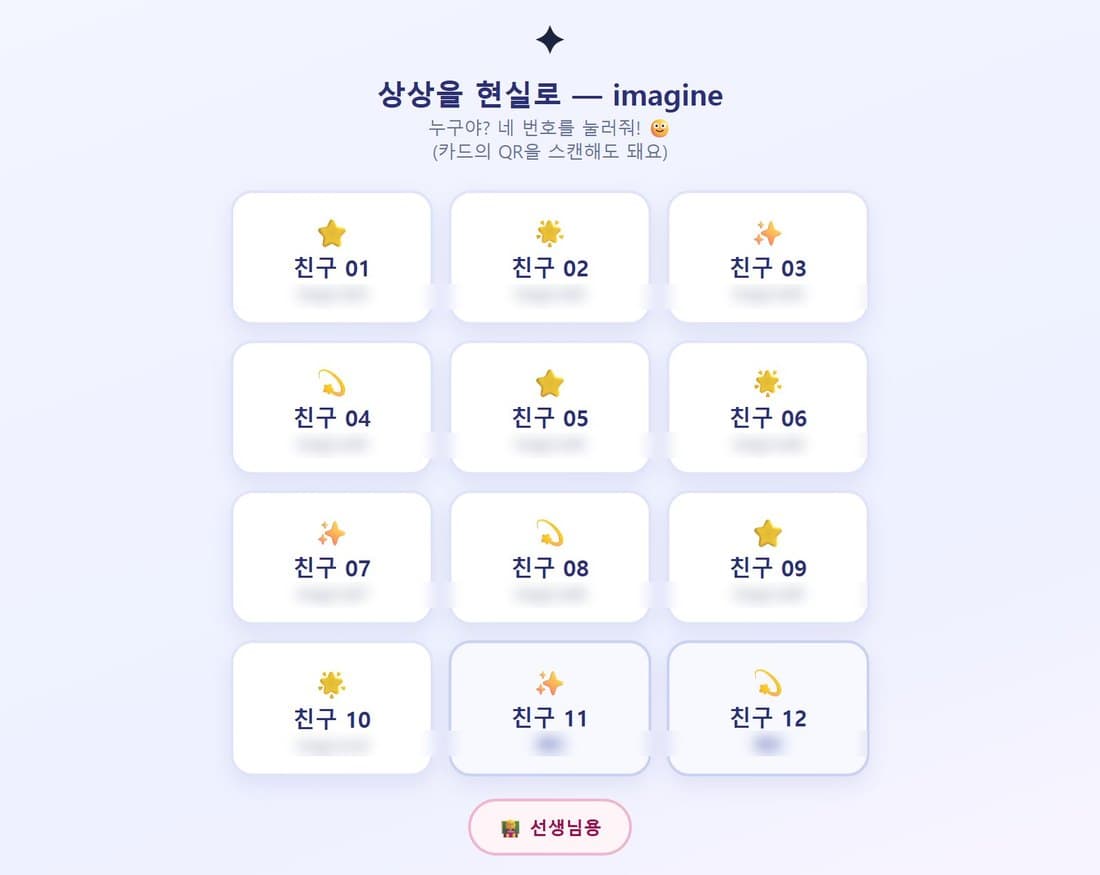
No account to create
Children tap their number on a card or scan a QR code, and they are in. The first 30 minutes of class are not lost to making IDs and passwords.
One agent for each person
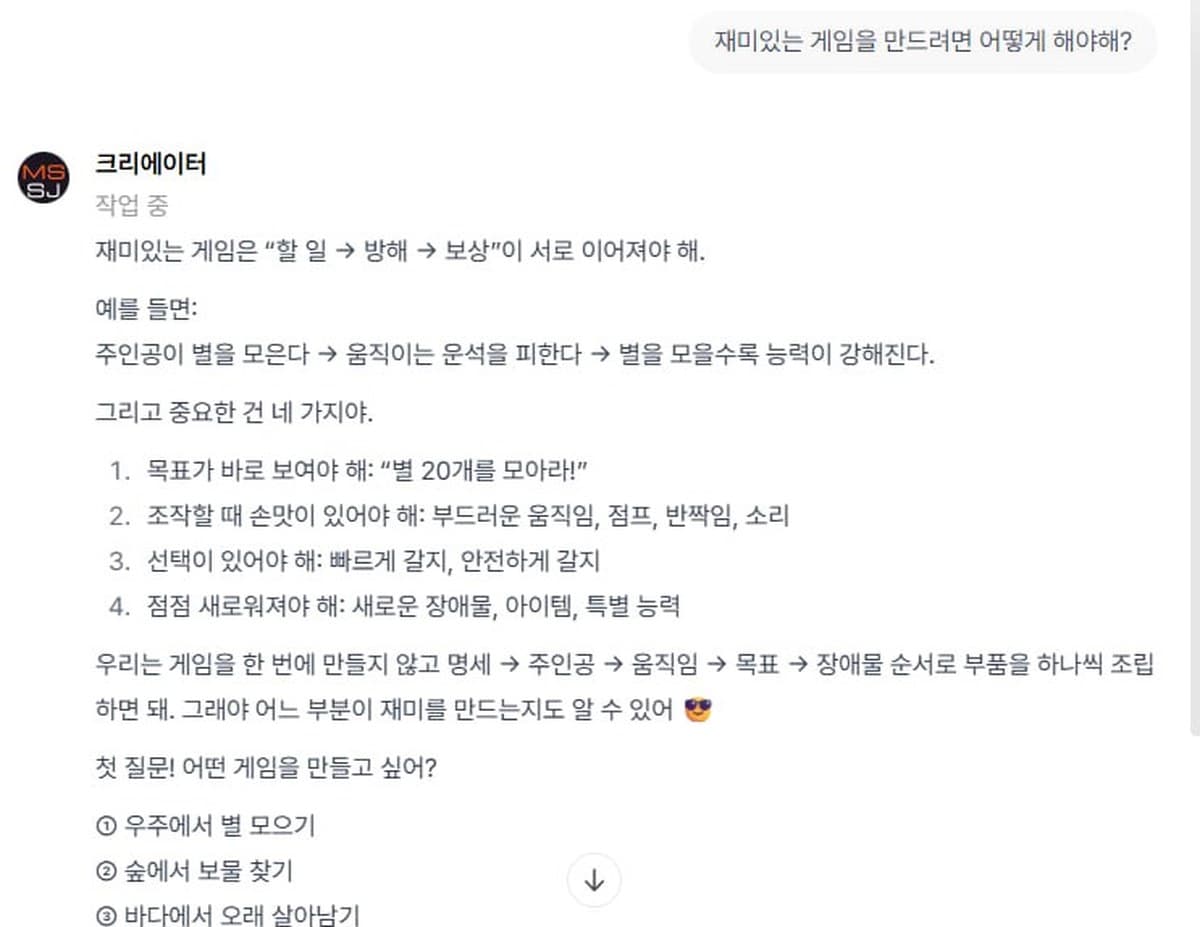
Each seat has its own conversation and its own workspace. No one has to keep pace with the person next to them.
Made with words only
There is nothing to install and no code. The agent understands short words. When a child is stuck, it asks back with three choices or fewer.
Friends play it right away
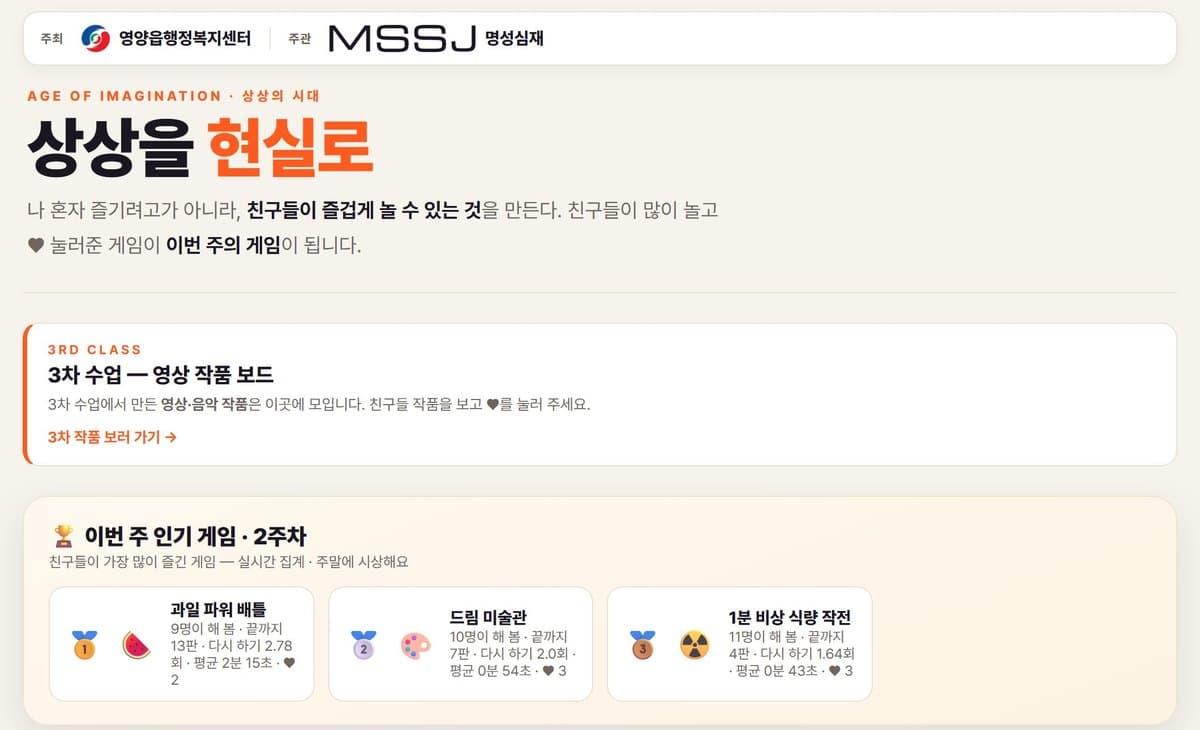
A finished work goes straight onto the works board. Games run in a safe, separate play area, where friends actually play them.
Ranking does not use likes
We count how many people played, how many rounds were played to the end, and whether people played again. Children rarely press “like”, but playing again is an honest signal.
The teacher sees every seat
The teacher sees the progress of each seat in real time and goes straight to a seat that has stopped. The aim is that no child quietly gives up.
In their words
These words come from
third-grade children.
Below are passages that stood out, taken from that day's class records. All of them are requests typed by third-grade children themselves. No one taught them these methods. Once the tool began to understand their words, each child went this far.
The children wrote in Korean. The quotes below are English translations.
- 01Idea
“Can I do this too? A “guess who I am” quiz. Like if the topic is animals, you hear hints and guess which animal it is”
The child did not pick from the given options. The child suggested something that was not there.
- 02A clear picture
“There are 500 waters at home and your hands can pick up 4 at most … in 30 seconds I have to get into the basement storage too … in the basement storage you can hold out day by day, eating food, you just hold out until day 60. But if you don’t eat food you die within 3 days and have to start again … there are spikes on the store floor and if you step on them you lose 10 life, you have 100 life in total … a person shows up and chases the character and if that person catches you, you lose a whole 30 life … if the character gets cold it freezes and dies within 5 days so … you go to the market and buy a boiler … if you hold out 60 days like this you win!”
A third grader typed this in one breath. It is the longest request in the class records. A long request means the picture in the child’s head is that clear. The child already sees the number of items, the time limit, the life points, the ways to die and the ways to survive. When the picture is clear, the picture itself becomes the design.
- 03Handing it over
“I can’t even start. And before you send it to me, from now on always try it first yourself, and if something is weird or not fun, fix it, and if it’s still not fun after you fix it, fix it again, keep repeating this and when it’s fun, then send it to me”
A person does not check and fix the work each time. The child handed the repeating itself to AI. People around the world now pay attention to this way of working and call it “loop engineering.” The child reached it alone, because the child needed it.
And this is the screen that came out of those words
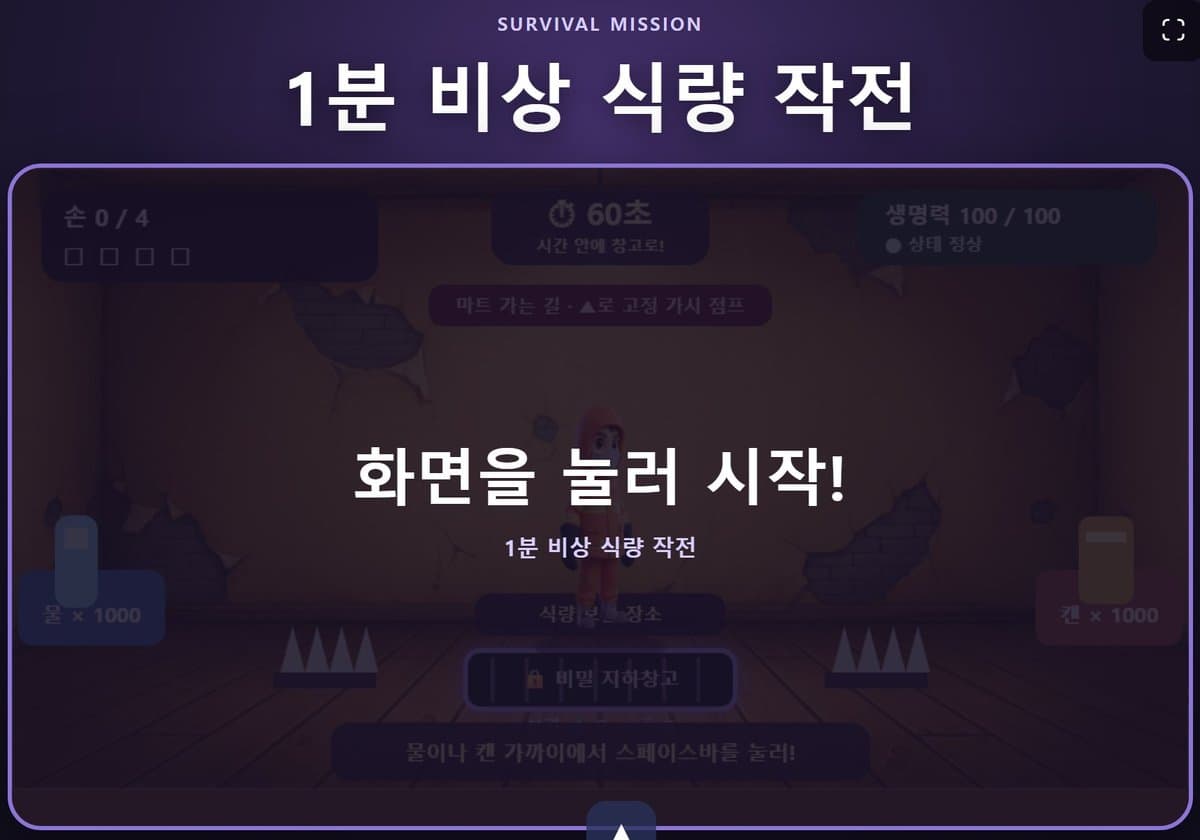
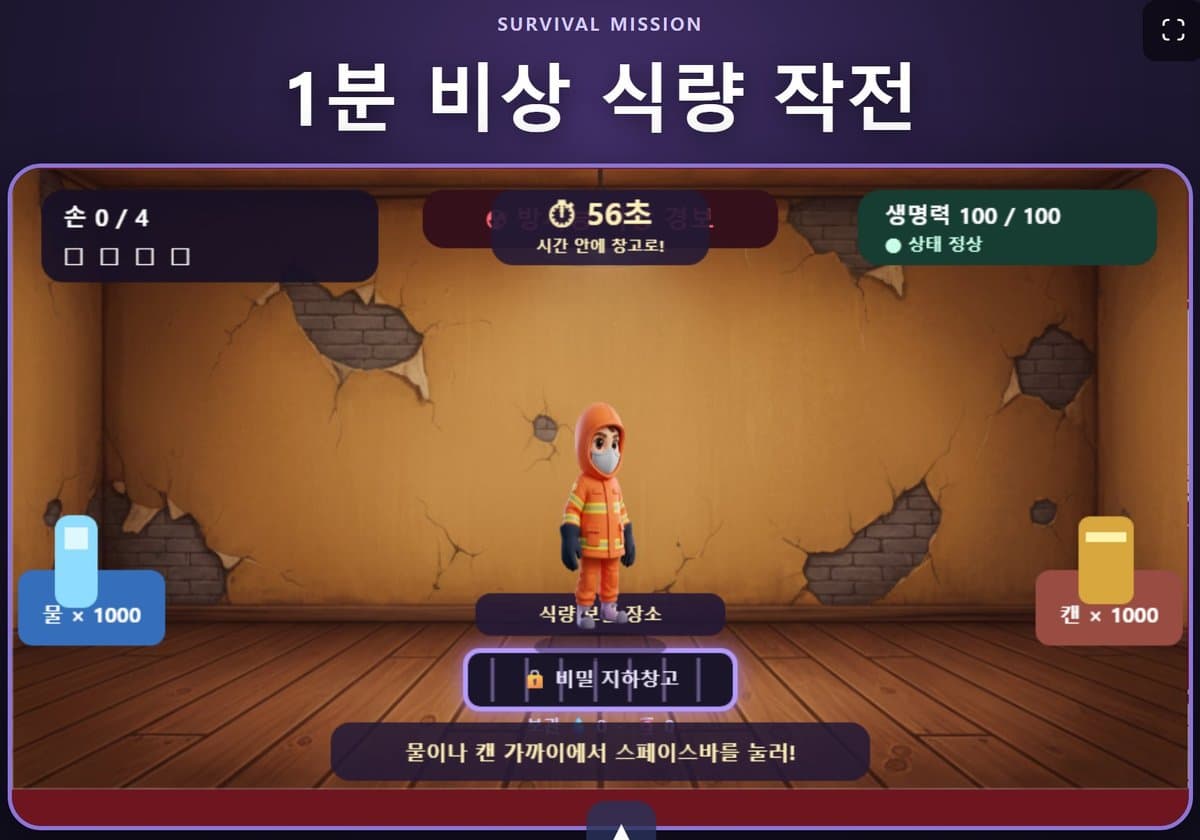
If you can picture something clearly, that picture can be built as it is. This was a third grader. The child had never learned code or how to write a plan. The child only described the picture in their head, clearly, to the end.
The words “try it yourself and fix it before you send it” handed the repeated checking to AI. People hold the direction and the standard, and the machine runs the repetition. People around the world now call this “loop engineering.” The child did not know the name, but reached it alone because the child needed it.
Problem solving and creativity did not appear because we taught them. We laid a floor where no one gets stuck, and the children climbed up by themselves. Our job is to make that floor solid.
What came out of the classroom that day
Same time, same tool. Yet no two works were alike.

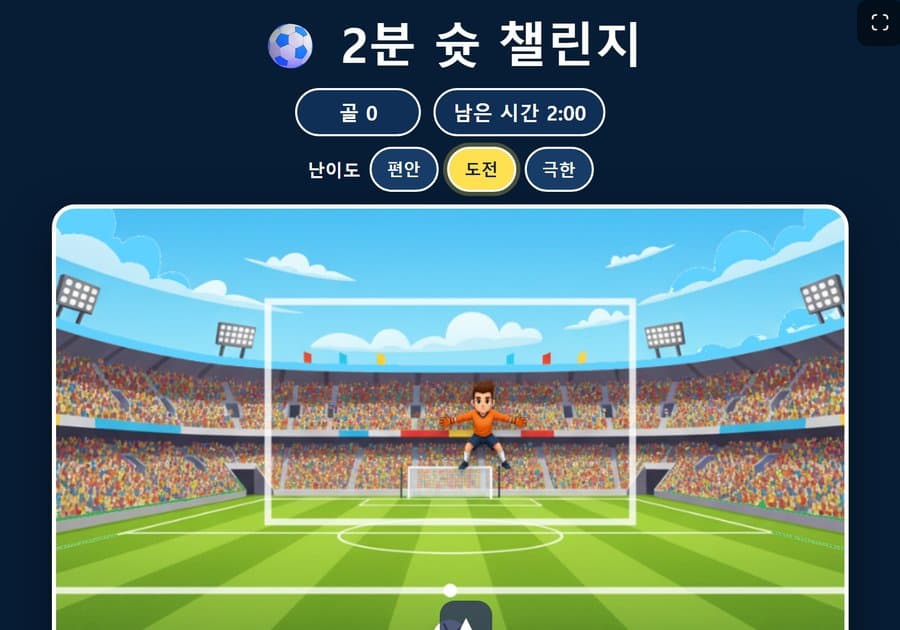
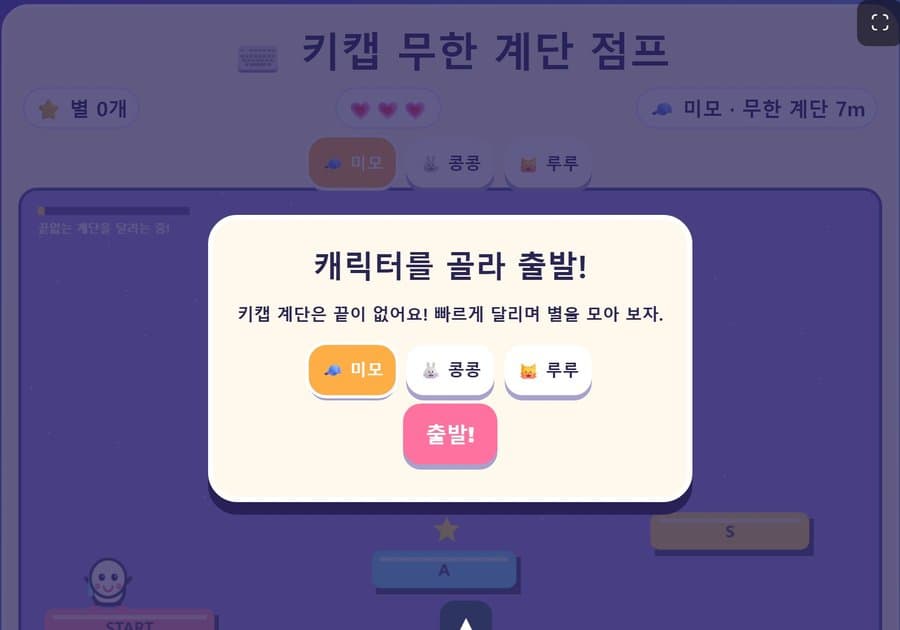
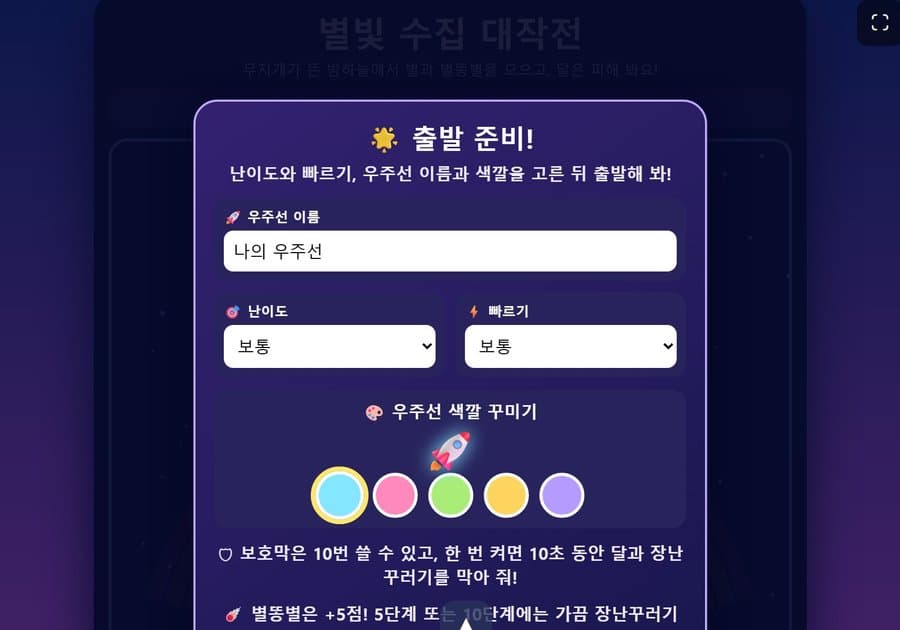
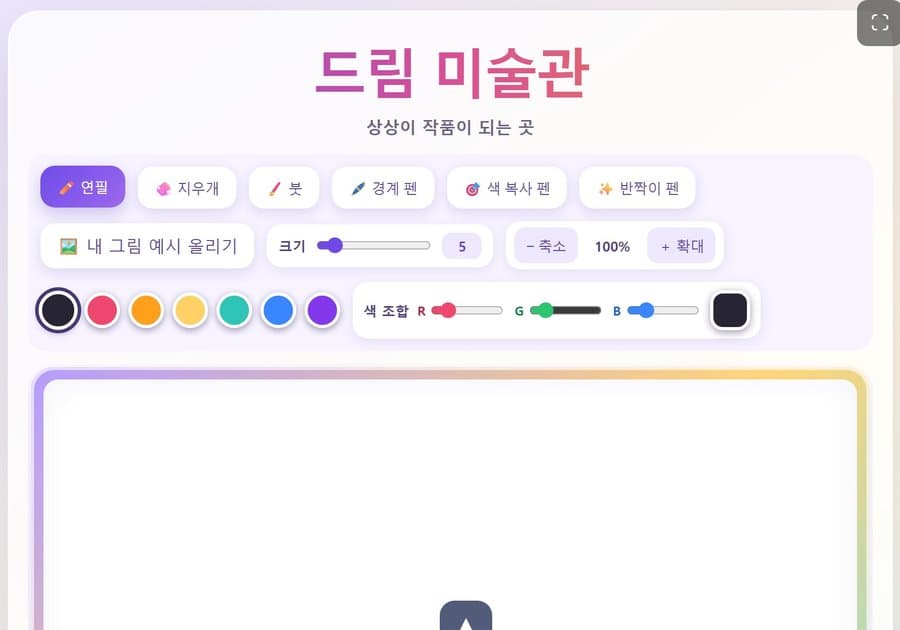
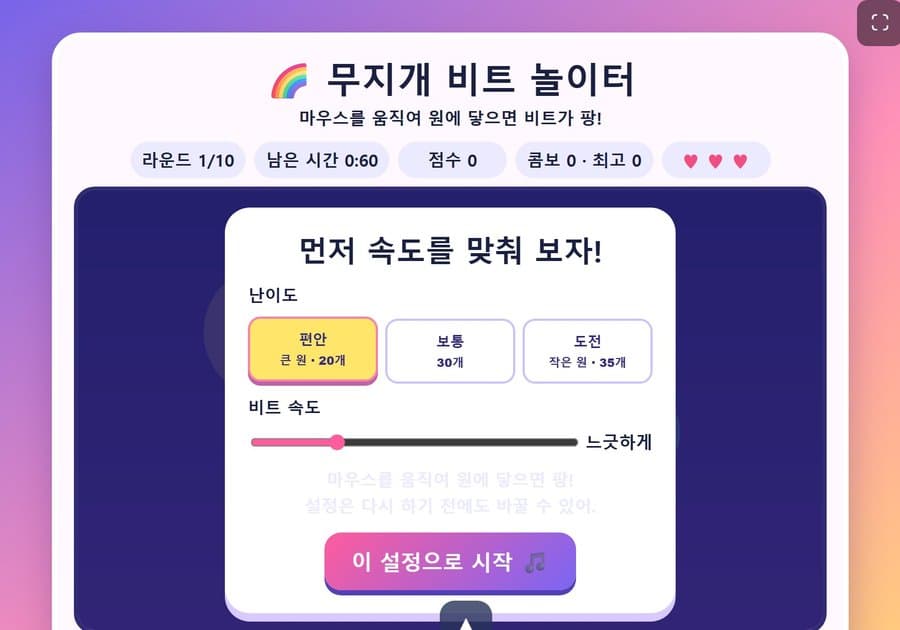

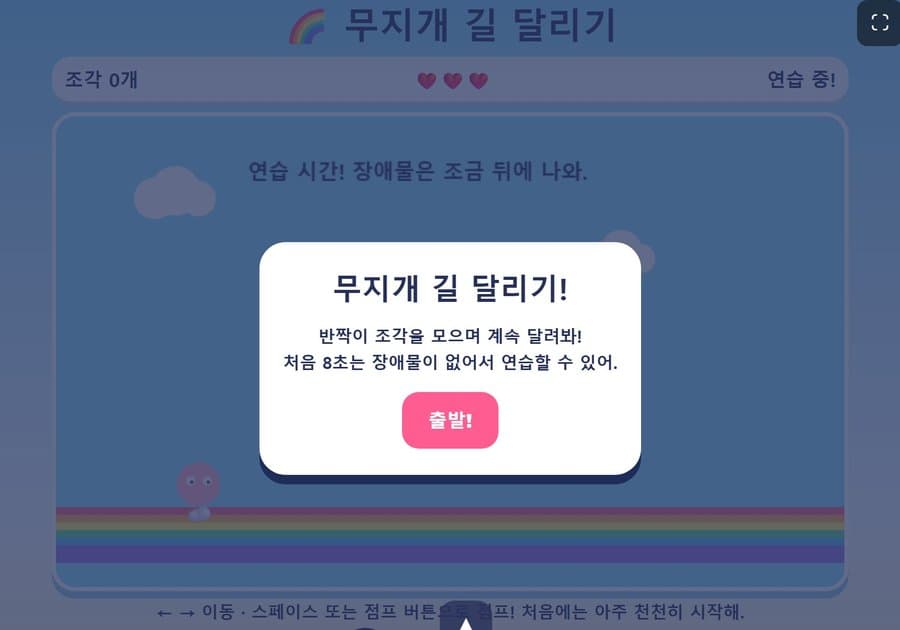
Note: These are screens of works made by participants. We do not show the names or nicknames of the people who made them. Work titles are translated from Korean.
Note: The quotes are taken from the class records. In the Korean original, we did not correct spelling or spacing. They contain no information that can identify a participant.
The classroom that day
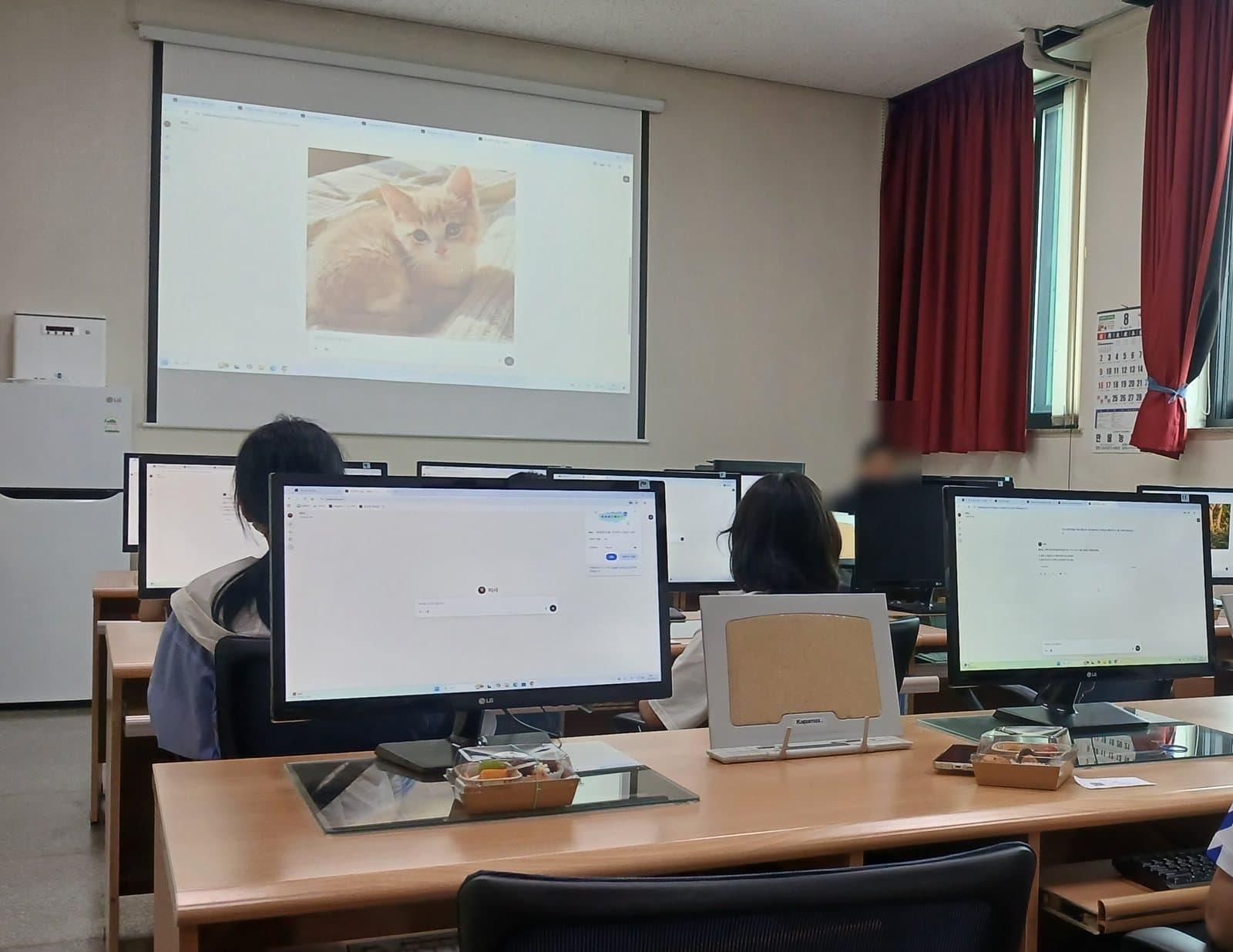
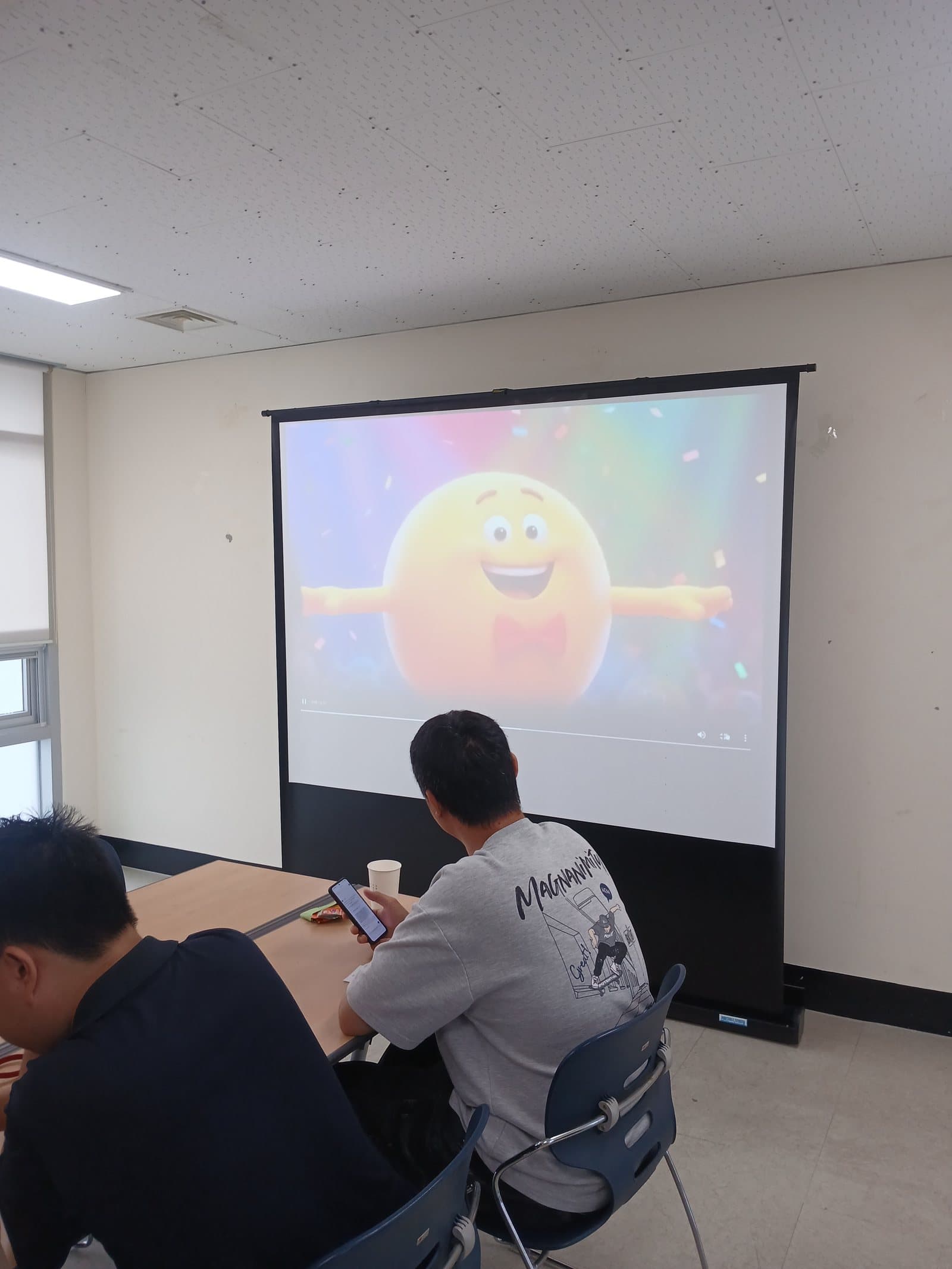
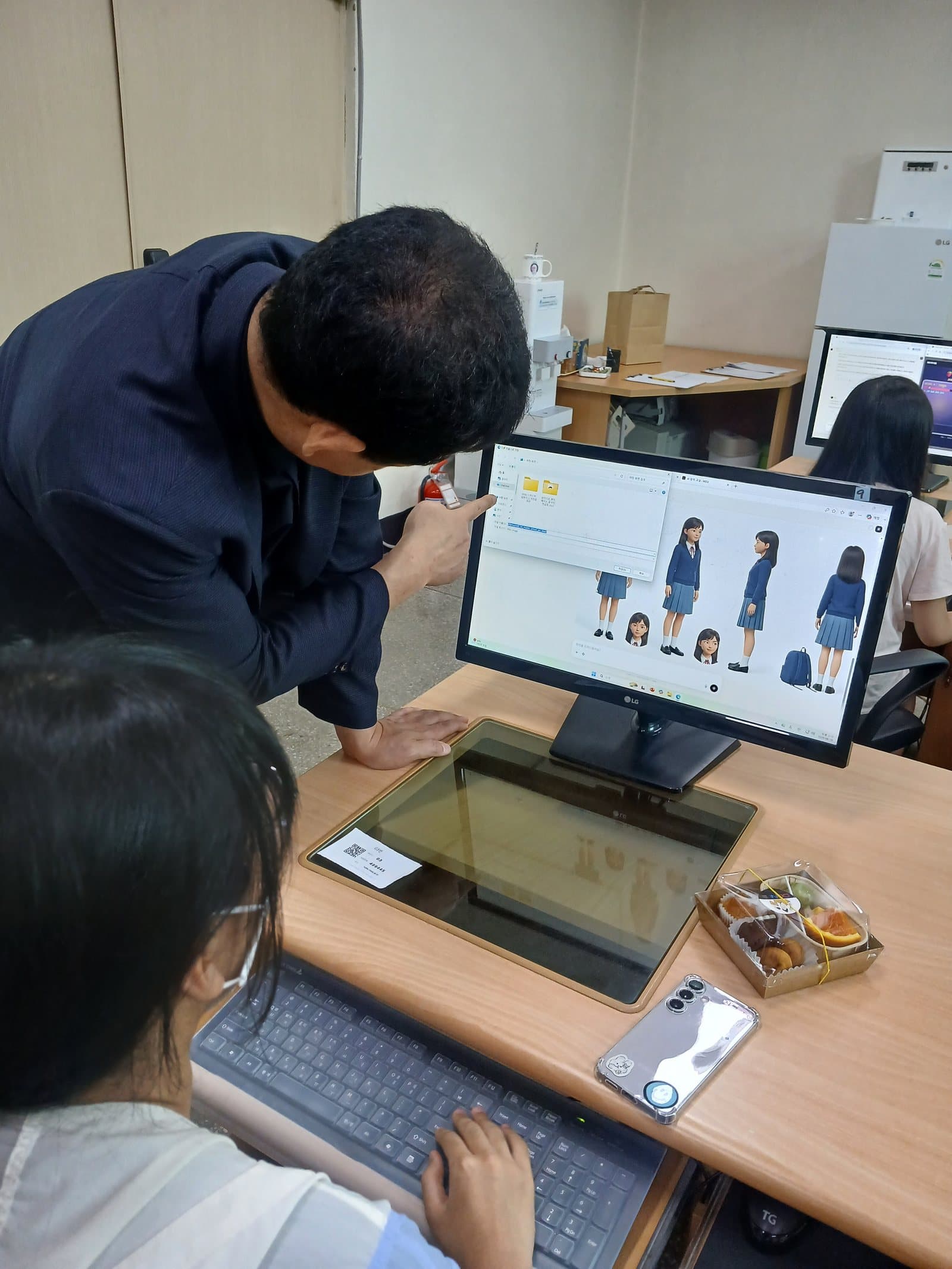
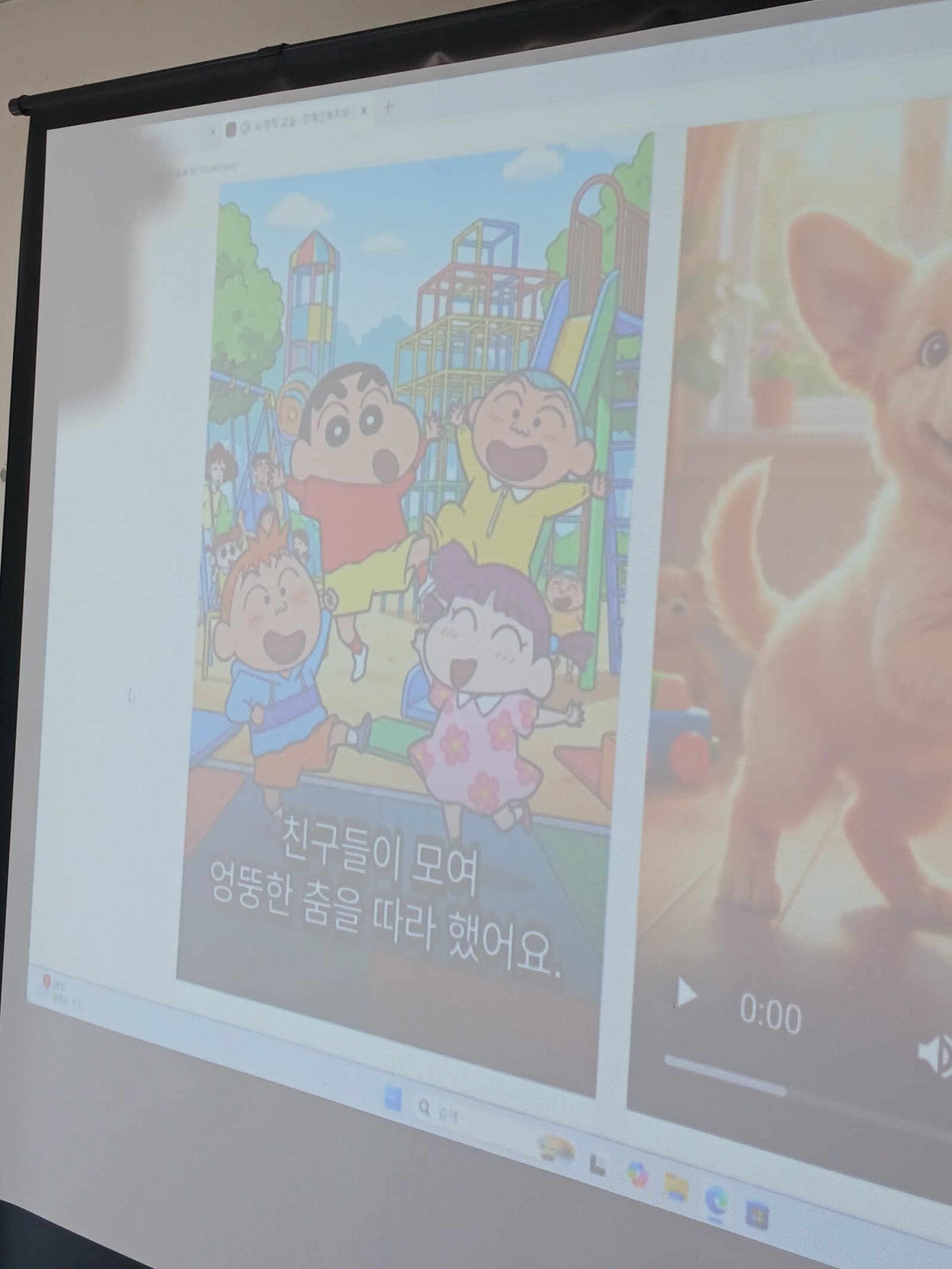
Note: Photos of participants show their backs or their screens. We do not show any information that can identify a person.
People at your organization can also
go home with their own finished work.
Tell us who the learners are, how many, how much time you have and what setting you use. We will design and propose a class that fits those people.